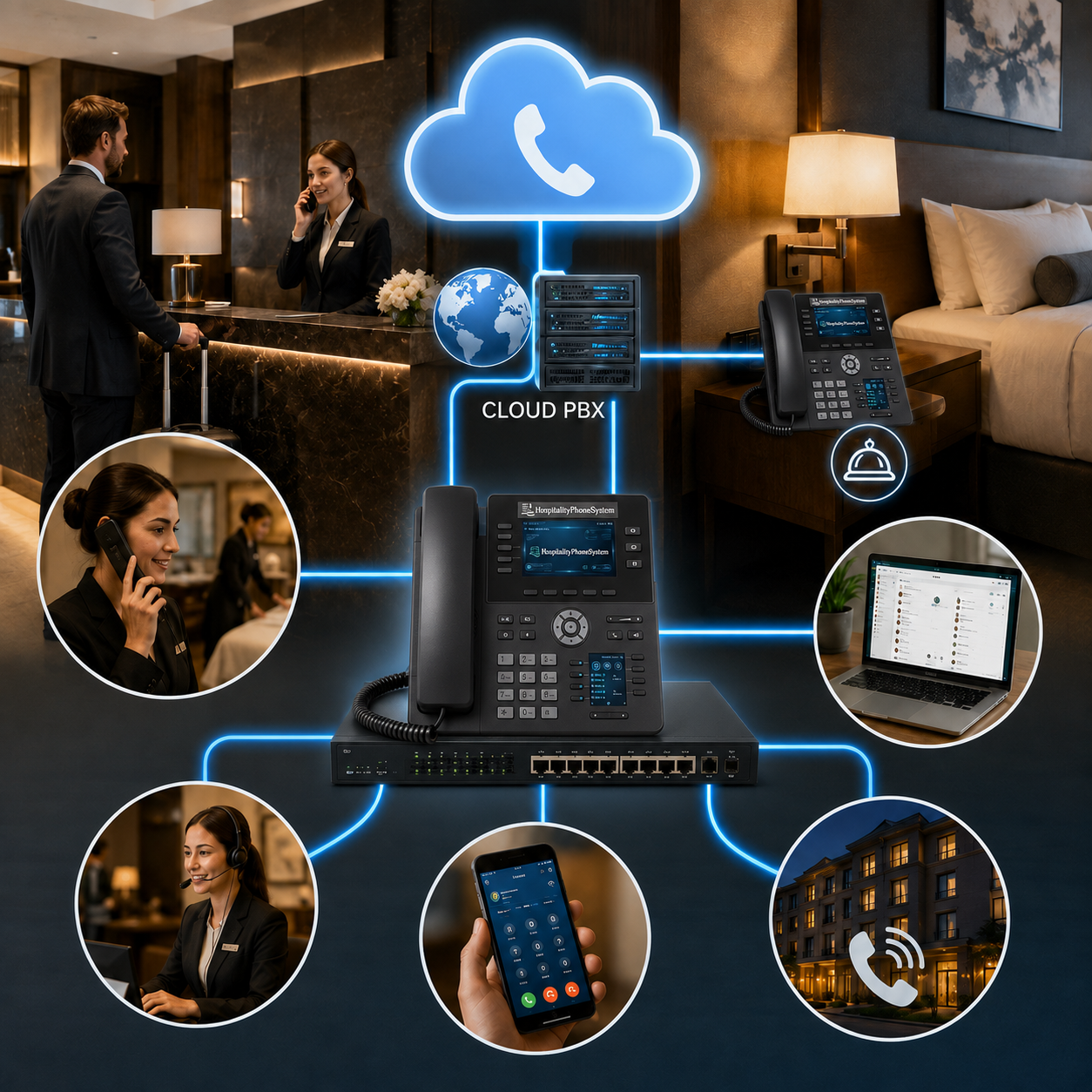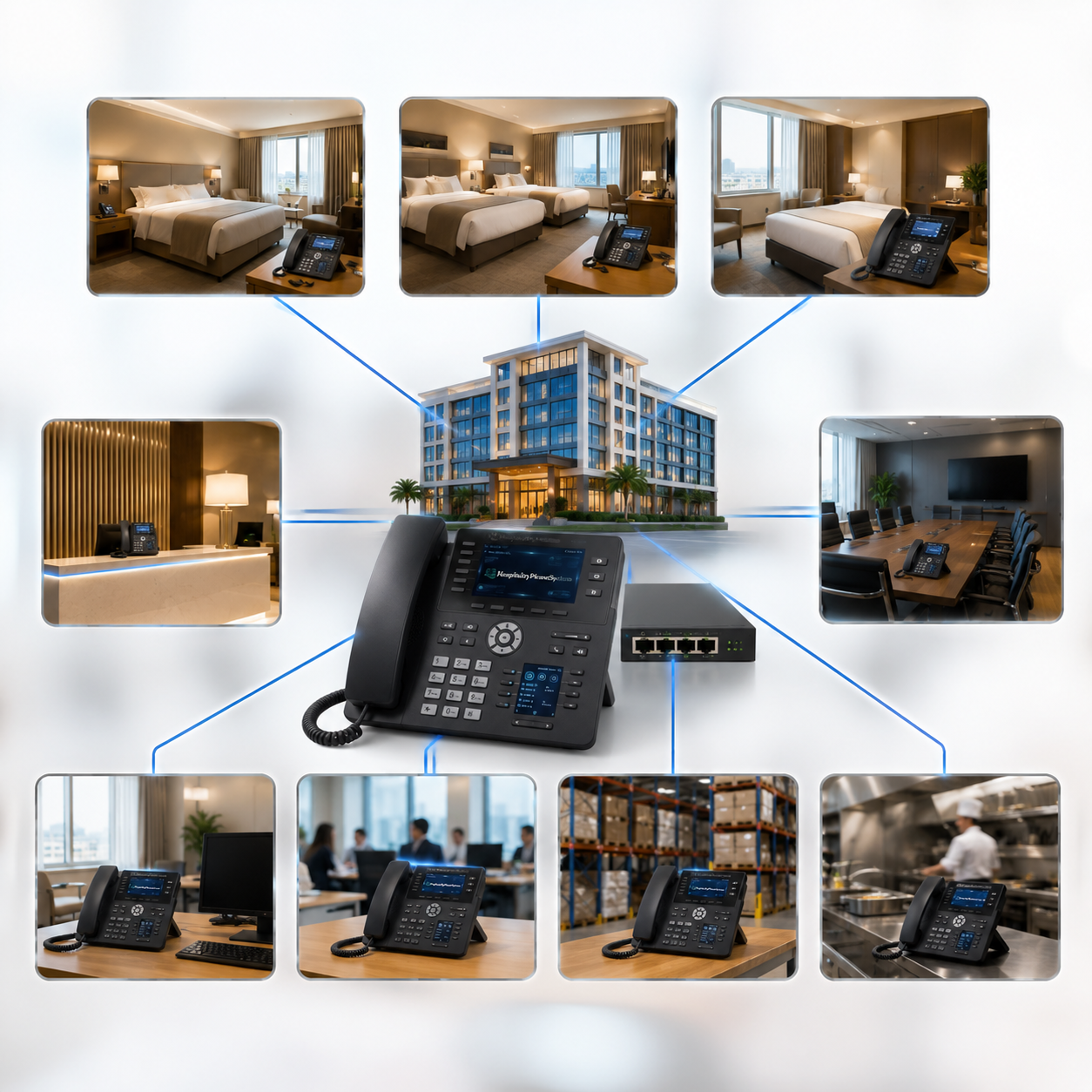
Choosing the best phone system for your business is no longer simply about finding a telephone that can make and receive calls. Modern businesses need a complete communication solution that can handle voice calls, business texting, call routing, voicemail, video meetings, CRM integrations, analytics, mobile communication, and increasingly, artificial intelligence.
For businesses in the United States, the right phone system can make it easier to answer customers, manage sales calls, support remote employees, organize communication, and create a more professional customer experience.
But there is no single phone system that is automatically the best for every company. A small business with five employees may have completely different requirements from a hotel, medical office, call center, law firm, e-commerce company, or enterprise with hundreds of employees.
That is why this guide explains how to choose the best phone system in USA based on business size, features, budget, communication requirements, integrations, scalability, and future growth.
What Is the Best Phone System?
The best phone system is a business communication platform that provides reliable calling while giving your employees the tools they need to communicate with customers and each other.
Traditional office phone systems were often based on physical PBX hardware, dedicated telephone lines, and desk phones. Modern systems increasingly use cloud technology and VoIP, allowing calls to travel over an internet connection and letting employees use desk phones, computers, tablets, and smartphones.
A modern business phone system may include:
- Business phone numbers
- VoIP calling
- Call forwarding
- Call routing
- Auto attendant
- Interactive Voice Response (IVR)
- Call queues
- Business SMS and texting
- Voicemail
- Voicemail transcription
- Call recording
- Call analytics
- Mobile applications
- Desktop applications
- CRM integrations
- Video meetings
- Team messaging
- AI-powered call features
The best solution depends on which of these features your business actually needs.
Best Phone System in USA: What Should You Look For?
When comparing the best phone system in USA, businesses should look beyond the monthly price. A low-cost system may become expensive if important features require additional charges or if the platform cannot scale with your business.
Here are the most important factors to consider.
1. Call Quality and Reliability
A business phone system must provide consistent and reliable communication. Dropped calls, poor audio quality, delays, and unreliable connections can negatively affect customer service and sales.
Before selecting a provider, consider network reliability, internet requirements, redundancy, uptime information, and the provider's support options.
2. VoIP Calling
VoIP, or Voice over Internet Protocol, allows businesses to make voice calls using an internet connection rather than traditional telephone infrastructure.
VoIP has become an important part of modern business communication because employees can often access their business phone system from computers and mobile devices as well as traditional IP desk phones.
3. Auto Attendant
An auto attendant can answer incoming calls and guide callers to the correct department or employee.
For example, a business could configure its phone system to say:
"Thank you for calling ABC Company. Press 1 for Sales, press 2 for Customer Support, press 3 for Billing, or press 0 for the operator."
This can reduce the workload on reception staff and help customers reach the correct department more quickly.
4. Call Routing
Call routing allows businesses to determine what happens when a customer calls.
Calls can be routed according to employee, department, business hours, location, availability, or other rules. Advanced routing can be especially useful for businesses with sales and customer support teams.
5. Business Text Messaging
Customers increasingly expect businesses to communicate through text messages. Depending on the provider and applicable regulations, business phone systems may support SMS or MMS communication.
This can be useful for appointment reminders, customer communication, sales follow-ups, notifications, and support conversations.
6. Mobile and Remote Work
A modern phone system should not force employees to remain at their desks.
Cloud-based systems can allow employees to use business communication tools from smartphones and computers, making them useful for remote employees, hybrid teams, traveling sales representatives, and distributed businesses.
7. CRM Integrations
CRM integration can connect your phone system with the tools your sales and customer service teams already use.
Depending on the platform, integrations may allow businesses to access customer information, log calls, manage contacts, track conversations, and automate parts of the sales process.
8. AI Features
Artificial intelligence is becoming an important part of business communication.
Depending on the provider, AI-powered phone systems may offer features such as:
- Call transcription
- Call summaries
- Conversation analysis
- AI-generated notes
- Call coaching
- Automated customer responses
- AI receptionists
- Voice assistants
- Sentiment or conversation analysis
AI can be especially valuable for sales and customer service teams that handle a large number of calls.
Best Phone System in USA for Different Types of Businesses
The best phone system depends heavily on the organization using it. Instead of selecting one system based only on a popularity ranking, businesses should match the platform to their requirements.
Best Phone System for Small Business
Small businesses typically need a system that is affordable, easy to configure, and simple for employees to use.
Important features include:
- Professional business numbers
- Call forwarding
- Auto attendant
- Voicemail
- Mobile applications
- Business texting
- Basic analytics
- Simple CRM integrations
A small company usually does not need every advanced enterprise feature. A straightforward cloud phone system may provide better value.
Best Phone System for Startups
Startups often need flexibility because employee numbers can change quickly.
A good startup phone system should allow companies to add users, numbers, departments, and features without replacing the entire system.
Startups should also look at integrations with CRM, customer support, productivity, and collaboration tools.
Best Phone System for Remote Teams
Remote businesses need communication systems that work beyond a traditional office.
Look for:
- Mobile apps
- Desktop applications
- Browser-based calling
- Call forwarding
- Business SMS
- Presence information
- Team messaging
- Video meetings
- Cloud administration
Best Phone System for Hotels
Hotels have different communication requirements from ordinary offices.
A hotel may need guest room extensions, front desk communication, housekeeping communication, wake-up calls, call transfer, voicemail, staff communication, and integration with hotel operations.
Hotel businesses should therefore evaluate a phone system based on hospitality-specific requirements rather than choosing a generic business phone system solely because it is inexpensive.
Best Phone System for Call Centers
Call centers need more advanced communication capabilities.
Important features can include:
- Automatic call distribution
- Advanced call queues
- Agent management
- Call recording
- Call monitoring
- Call analytics
- Supervisor tools
- CRM integration
- Conversation intelligence
- Reporting dashboards
Best Phone System for Enterprise Businesses
Large organizations generally need a system that can support multiple locations, departments, users, and business applications.
Enterprise buyers should evaluate security, administration, integrations, scalability, reporting, compliance requirements, support, and business continuity in addition to price.
Best VoIP Phone System vs. Traditional Phone System
One of the biggest decisions businesses face is whether to continue using traditional phone infrastructure or move to a modern VoIP or cloud-based phone system.
| Feature | Traditional Phone System | Modern VoIP Phone System |
|---|---|---|
| Calling | Traditional telephone infrastructure | Internet-based calling |
| Remote work | Limited | Generally easier to support |
| Mobile access | Limited | Commonly supported |
| Call routing | Basic to advanced depending on hardware | Highly configurable |
| CRM integration | Limited on older systems | Common feature |
| Scalability | May require hardware changes | Usually easier to scale |
| AI features | Limited | Increasingly available |
| Administration | Often hardware-dependent | Typically cloud-based |
Modern business phone systems increasingly combine voice with messaging, collaboration, analytics, and other software capabilities.
Best Phone System Features for Modern Businesses
When comparing phone systems, create a feature checklist before requesting quotes or starting trials.
Essential Features
- Business phone numbers
- Inbound and outbound calling
- Call forwarding
- Voicemail
- Caller ID
- Call routing
- Mobile access
- Call history
Advanced Features
- Auto attendant
- IVR
- Call queues
- Call recording
- Call analytics
- CRM integration
- Business SMS
- Video conferencing
- Team messaging
- Call monitoring
AI-Powered Features
- AI call summaries
- Transcription
- AI receptionist
- Conversation intelligence
- Automated notes
- Call coaching
- Automated workflows
How Much Does a Business Phone System Cost?
The cost of a business phone system depends on the provider, number of users, plan, features, contract terms, hardware, and calling requirements.
Many modern cloud phone systems use per-user pricing, while others offer different structures based on features, phone numbers, usage, or business requirements.
When comparing prices, do not look only at the advertised monthly price. Ask about:
- Monthly user fees
- Annual contracts
- Setup fees
- Phone hardware
- Number porting
- International calling
- Premium support
- AI features
- Call recording
- SMS charges
- Additional phone numbers
- Advanced integrations
Public 2026 comparisons show that business VoIP pricing can vary significantly by provider, plan and billing term, making feature-to-price comparison more useful than comparing headline prices alone.
How to Choose the Best Phone System in USA
Follow these steps before choosing a provider.
Step 1: Determine Your Number of Users
Start by identifying how many employees need access to the system.
Separate employees into groups such as sales, customer support, management, reception, operations, and remote workers.
Step 2: Identify Your Calling Requirements
Determine how many calls your business receives and makes each day.
Consider whether you need a local number, toll-free number, multiple numbers, extensions, departments, or international calling.
Step 3: List Your Required Features
Do not pay for features your business will never use. At the same time, make sure critical features are available before signing a contract.
Step 4: Check Integrations
Make a list of the software your employees already use.
For example:
- CRM
- Help desk
- Microsoft 365
- Google Workspace
- Sales software
- Customer support software
- Accounting software
- Collaboration tools
Then check whether the phone system integrates with those platforms.
Step 5: Consider Future Growth
Choose a system that can grow with your organization.
If you have 10 employees today but expect to have 50 employees in the next few years, make sure adding users and locations will not become unnecessarily complicated.
Step 6: Test Before You Buy
If a provider offers a trial, demo, or test environment, use it.
Test call quality, mobile applications, call routing, voicemail, administration, integrations, reporting, and customer support.
Cloud Phone System vs. On-Premise Phone System
Businesses generally have two broad approaches: cloud-hosted phone systems and on-premise systems.
Cloud Phone Systems
A cloud phone system is hosted by the service provider. Businesses typically manage users and settings through an online administration portal.
Cloud systems can be attractive for companies that want easier remote access, faster deployment, and less on-site telecom hardware.
On-Premise Phone Systems
An on-premise phone system uses hardware located at the business or within infrastructure controlled by the organization.
This approach can provide greater control for organizations with specific technical or operational requirements, but it may require more hardware management and IT expertise.
Why Businesses Are Moving Toward Modern Phone Systems
The business phone system has evolved from a device on an office desk into a broader communications platform.
Modern systems can bring calls, messaging, video, customer information, analytics, and AI capabilities into a connected workflow.
This is particularly valuable for organizations with hybrid and remote employees because employees can remain connected without being physically tied to a traditional office phone.
Modern business phone systems are also increasingly evaluated on their integrations, AI capabilities, ease of use, scalability, and customer experience rather than voice calling alone.
Common Mistakes When Choosing a Business Phone System
Choosing Only on Price
The cheapest phone system is not necessarily the best phone system. A low monthly price can become expensive if important features, support, integrations, or additional numbers require extra charges.
Ignoring Mobile Users
If employees regularly work outside the office, make sure the phone system provides a good mobile experience.
Not Checking Integrations
A phone system that cannot connect with your CRM or customer support software may create additional manual work for employees.
Buying Too Many Features
Advanced features can be useful, but businesses should pay for capabilities that solve real operational problems.
Not Planning for Growth
Your phone system should be capable of supporting additional employees, departments and locations as your company grows.
Best Phone System in USA: Questions to Ask Providers
Before signing up, ask the provider these questions:
- How much does each user cost?
- Is there a contract?
- Is there a free trial?
- Can I keep my existing business number?
- Is number porting included?
- Are business SMS features included?
- Is call recording included?
- Are AI features included or charged separately?
- Which CRM integrations are supported?
- Does the system support mobile applications?
- Can remote employees use the system?
- What happens if the internet connection fails?
- What customer support options are available?
- Can users and extensions be added easily?
- Does the provider support toll-free numbers?
- What international calling options are available?
Best Phone System for the USA: A Simple Decision Guide
| Business Type | What to Prioritize |
|---|---|
| Small Business | Affordable pricing, ease of use, business numbers and basic call management |
| Startup | Flexibility, scalability, integrations and simple administration |
| Remote Team | Mobile apps, desktop calling, messaging and cloud access |
| Hotel | Guest communication, extensions, front desk and hospitality workflows |
| Call Center | Queues, ACD, recording, analytics and agent management |
| Enterprise | Scalability, security, integrations, administration and support |
| Sales Team | CRM integration, call recording, analytics and AI |
| Customer Support | Queues, routing, recording, reporting and customer history |
Best Phone System vs. Best VoIP Phone System
The terms "best phone system" and "best VoIP phone system" are often used interchangeably, but they can describe slightly different things.
A phone system is a broader category that can include traditional, hosted, cloud and VoIP solutions. A VoIP phone system specifically uses internet-based communication technology.
For many modern businesses, VoIP and cloud-based solutions are attractive because they can combine calling with software features such as mobile access, integrations, analytics, messaging and AI.
Frequently Asked Questions About the Best Phone System
What is the best phone system in USA?
The best phone system in USA depends on your business size, budget, users, features, integrations and communication requirements. There is no single system that is best for every business.
What is the best phone system for a small business?
The best phone system for a small business should be affordable, easy to manage and provide essential features such as business numbers, call forwarding, voicemail, auto attendant, mobile access and business texting.
Is VoIP better than a traditional phone system?
For many modern businesses, VoIP can provide greater flexibility, especially when employees work remotely or businesses need software integrations and cloud-based administration. However, the right choice depends on the company's infrastructure and requirements.
How much does a business phone system cost?
Business phone system pricing varies by provider, number of users, features, billing term, hardware and calling requirements. Businesses should compare the total cost of ownership rather than looking only at the advertised starting price.
Can employees use a business phone system from their mobile phones?
Many modern cloud phone systems provide mobile applications or other remote access options, allowing employees to make and receive business calls away from their desks.
Can a phone system integrate with a CRM?
Yes. Many modern business phone systems offer integrations with CRM and customer-service platforms. Available integrations vary by provider and plan.
Do I need desk phones for a modern business phone system?
Not necessarily. Depending on the provider, employees may be able to use IP desk phones, computers, browsers, tablets or smartphones.
What should I look for in a business phone system?
Look at reliability, call quality, pricing, scalability, call management, mobile access, business texting, CRM integrations, analytics, security, support and the features your employees actually need.
Final Verdict: Finding the Best Phone System in USA
The best phone system is not necessarily the one with the longest feature list or the lowest advertised price. It is the system that fits your company's communication requirements today while giving you room to grow tomorrow.
For a small business, simplicity and affordability may be the most important factors. A growing company may prioritize CRM integrations, mobile communication and scalability. A call center may need advanced queues, monitoring and analytics. A hotel may require hospitality-specific functionality. An enterprise may focus on security, administration, integrations and reliability.
Modern cloud and VoIP phone systems have made business communication more flexible than traditional office telephone systems. With the right platform, businesses can connect voice calling with messaging, mobile access, customer data, analytics and AI-powered tools.
Before choosing a provider, define your requirements, compare the total cost, test the system, review the available integrations and make sure the platform can support your future growth.
BestPhoneSystem.us is designed to help businesses compare phone systems, understand important features, evaluate different types of business communication solutions, and find the right phone system for their specific needs.